Fliers for download (in Slovak language)
Overview
Orthodontic treatment is possible at any age. However, the optimal time for treating various anomalies may vary. In some cases, it is recommended to start treatment during childhood. Nevertheless, excellent results can often be achieved even with later treatment or in adulthood.
Treatment usually takes 1 to 3 years, depending on the severity of the case.
After the braces are applied, mild pain or discomfort may occur, but it usually subsides quickly.
Appointments are scheduled every 4 to 8 weeks, during which the progress of the treatment is monitored and the appliance is adjusted.
During treatment, regular brushing of teeth, use of interdental brushes and special brushes, as well as mouthwash, are essential to prevent tooth decay and gum inflammation. We also recommend regular visits to professional dental hygiene.
Our goal is not only to achieve an aesthetically pleasing smile but also a functional and stable result for the teeth and soft tissues of the face, contributing to overall health and comfort.
After treatment, it is generally recommended to wear a retainer, which helps maintain the teeth in their newly achieved position and ensures long-term stability of the results.
Overview
Orthodontic treatment is possible at any age. However, the optimal time for treating various anomalies may vary. In some cases, it is recommended to start treatment during childhood. Nevertheless, excellent results can often be achieved even with later treatment or in adulthood.
Treatment usually takes 1 to 3 years, depending on the severity of the case.
After the braces are applied, mild pain or discomfort may occur, but it usually subsides quickly.
Appointments are scheduled every 4 to 8 weeks, during which the progress of the treatment is monitored and the appliance is adjusted.
During treatment, regular brushing of teeth, use of interdental brushes and special brushes, as well as mouthwash, are essential to prevent tooth decay and gum inflammation. We also recommend regular visits to professional dental hygiene.
Our goal is not only to achieve an aesthetically pleasing smile but also a functional and stable result for the teeth and soft tissues of the face, contributing to overall health and comfort.
After treatment, it is generally recommended to wear a retainer, which helps maintain the teeth in their newly achieved position and ensures long-term stability of the results.
Fixed braces
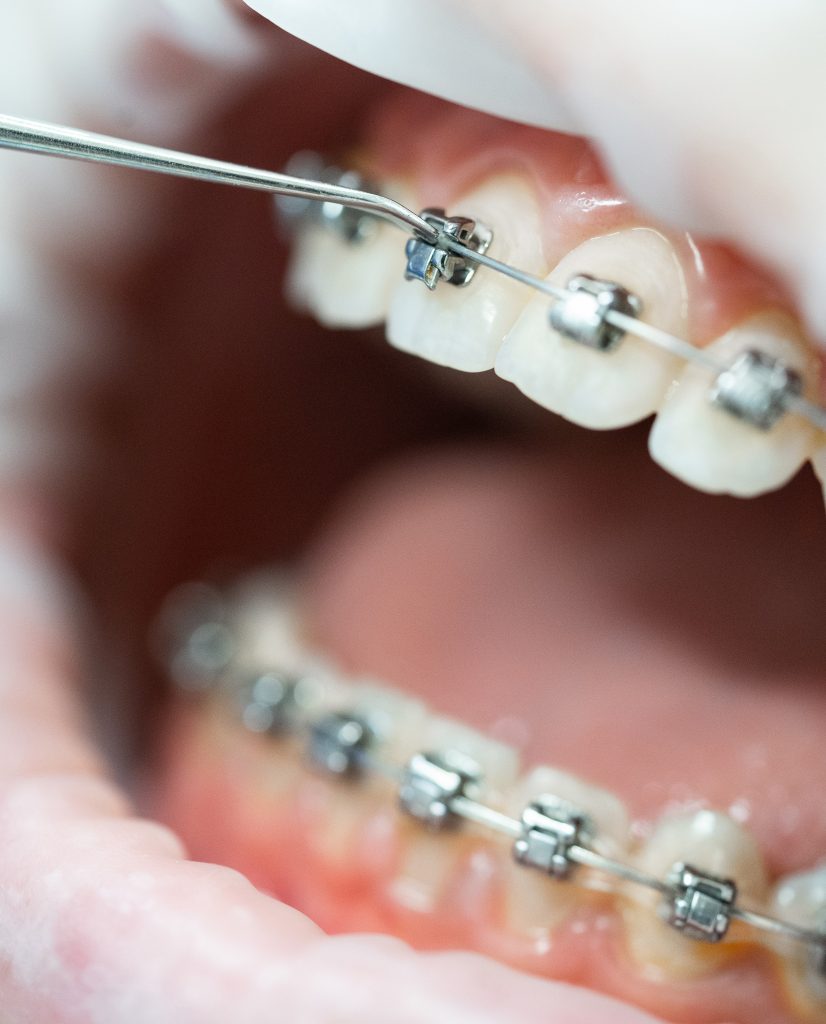
Braces are one of the most popular treatment options. They are used for all age groups in various versions, including traditional metal brackets as well as more discreet ceramic brackets.
- a wide range of anomalies
- high efficacy
- without requiring cooperation
- aesthetics
- hygiene
- comfort
Fixed braces
These are devices that are securely attached to the teeth and gradually move them into the correct position.
Special care for the appliance is not necessary. However, extra attention to oral hygiene around the brackets and wires is required, including thorough cleaning with interdental and special single-tufted brushes. Regular visits to professional dental hygiene are recommended.
"Fixed braces are a proven and effective method for predictable teeth alignment and the correction of various dental and jaw anomalies. The main advantage is the 'strength and precision' with which these appliances act on the teeth. They are also the choice for the most severe cases and for combining orthodontic treatment with jaw surgery. Apart from the need for improved oral hygiene, no additional demands are placed on the patient, and the treatment progresses 'on its own.' An important factor is the financial aspect, as this treatment is partially covered by health insurance for patients under 18 years of age, as well as for patients with severe bite issues.
The main disadvantages are the visibility of the appliance, more complicated oral hygiene, and slightly greater discomfort compared to clear aligners. Fixed appliances are also generally less suitable for treating anomalies such as open bite in the front teeth and certain types of facial growth in patients.
Risks may include gum irritation, temporary difficulties with brushing teeth, or occasional loosening of the brackets, which can be quickly fixed. Poor oral hygiene can lead to demineralization, tooth decay, and gum inflammation.
After the appliance is placed, some patients may experience minor discomfort. However, most patients quickly adjust and adapt to the new conditions.
Clear aligners
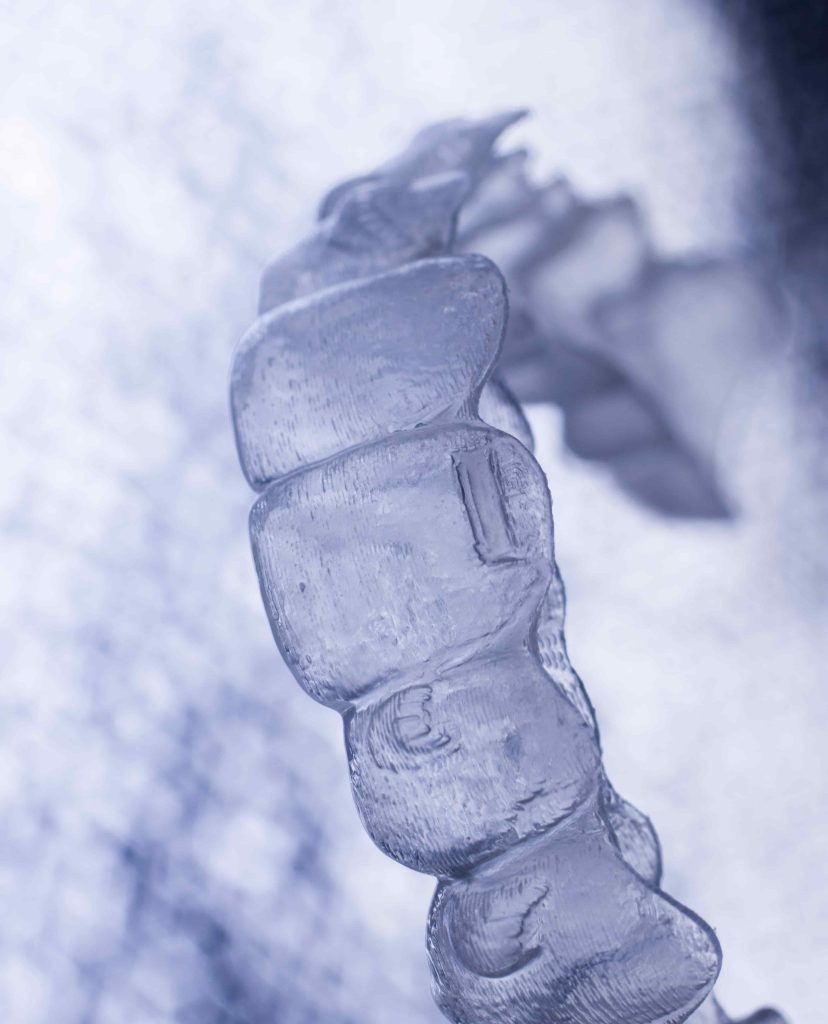
Clear aligners are modern and nearly invisible. They are a clear treatment choice for anyone seeking discretion.
- aesthetics
- comfort
- hygiene
- necessity of cooperation
- less suitable for certain types of anomalies
Clear aligners
"It is a series of consecutively applied, custom-made plastic removable aligners that gradually move the teeth into the correct position. The aligners are replaced with a new set every 5-14 days. For better retention of the aligners on the teeth and to achieve the ideal treatment result, small attachments made of a material similar to filling material in the color of the teeth are bonded to the teeth.
For successful treatment, it is necessary to wear the aligners on the teeth for almost the entire day (20-22 hours), with the exception of eating and cleaning. Regular cleaning of the appliances with a toothbrush is also essential, and it is recommended to treat them with a special disinfecting and cleaning solution. The aligners can discolor when consuming food and drinks with pigments (e.g., curry).
The appliances provide excellent aesthetics (they are almost invisible). Major advantages include comfort (the aligners can be removed from the mouth at any time), ease of maintenance and cleaning of the appliances. The improved oral hygiene care is also significant. Treatment with clear aligners is more effective and often faster for correcting certain issues. Check-ups typically occur at longer intervals (usually every 8-12 weeks) compared to fixed braces.
The main disadvantage of these appliances is the necessity of patient cooperation (wearing the aligners consistently), as failure to do so will unnecessarily prolong and complicate treatment. These aligners are less suitable for severe and complex cases. Risks also include the possibility of loss or damage. The cost of the appliances is higher due to the technical complexity of manufacturing and high individualization, especially since they are not covered by health insurance.
In case of loss or damage to the aligner, it is important to contact our office as soon as possible to schedule the creation of replacement appliances.
The patient undergoes regular check-ups, during which the movement of the teeth and the progress of treatment are monitored, and updates are made if necessary (which is common with this type of treatment).
Traditional removable braces
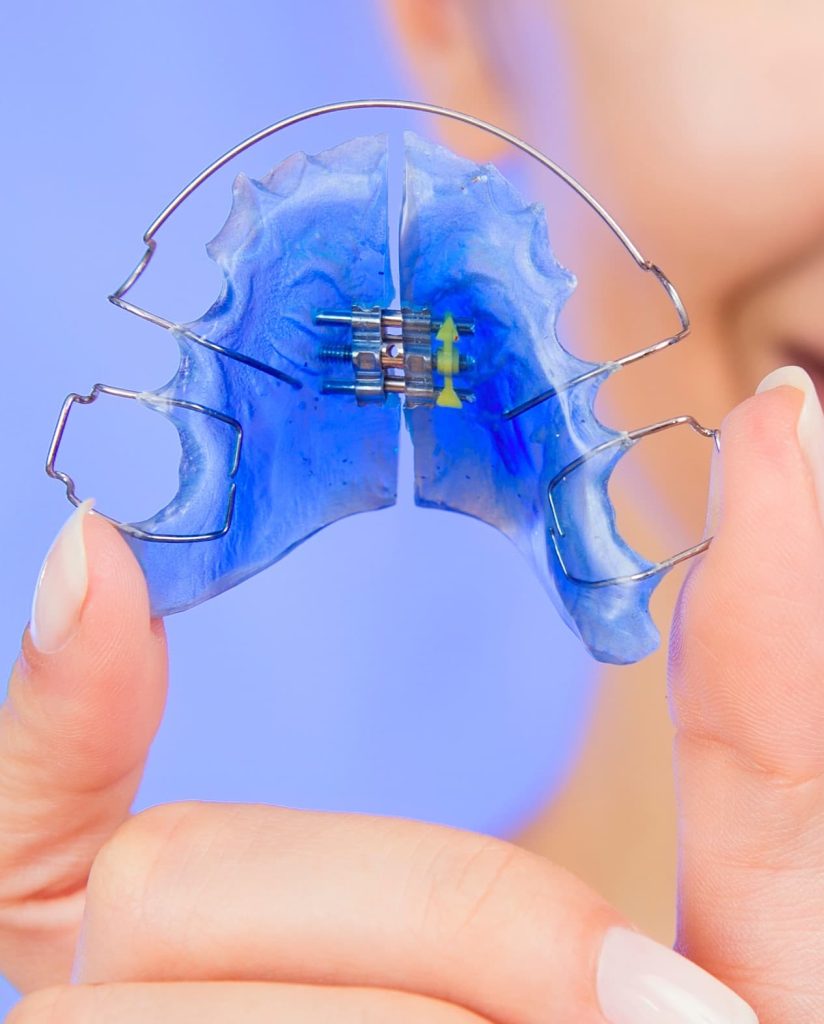
They are used in cases where it is necessary to influence the growth and development of the jaws and facial skeleton. Their main function is to ensure optimal conditions for the eruption of permanent teeth without rotations or crowding. In most cases, subsequent correction with fixed appliances or an appliance that works on the teeth all day is needed. This appliance significantly facilitates the subsequent treatment.
- advantageous during growth
- excellent for retention
- aesthetics
- small spectrum of indications
- low efficacy
- necessity of cooperation
Early treatment
"In the case of certain anomalies, it is advisable to start orthodontic treatment during the mixed dentition stage, that is, during the time when both deciduous and permanent teeth are present. In rare cases, treatment may even begin very early during the primary dentition.
Treatment during this period can address some of the underlying causes of improper tooth eruption, prevent the fixation of incorrect tooth positions and worsening of the malocclusion, prevent improper development of the dental arches and jaws, create favorable conditions for proper tooth eruption, correct certain deviations in the relationship of dental arches, support or adjust jaw growth, or prevent the development of functional asymmetry. Early treatment can also create the right conditions for proper tongue positioning, proper function, and development of the myofascial system of the face and breathing.
The following anomalies are treated at this age: crossbite with forced guidance, deep bite and anterior crossbite, retained incisors and canines (tooth eruption disorders), open bite caused by dental deviation, large overjet of upper anterior teeth with risk of injury, and sometimes even significant crowding.
Maintaining treatment results
Maintenance of treatment results, professionally known as retention, is necessary to prevent relapse, meaning the partial or complete return of teeth to their original position after treatment. It is an essential and inseparable part of orthodontic treatment. It continues for as long as needed and for as short a time as possible, depending on the nature of the orthodontic issue.
Retention
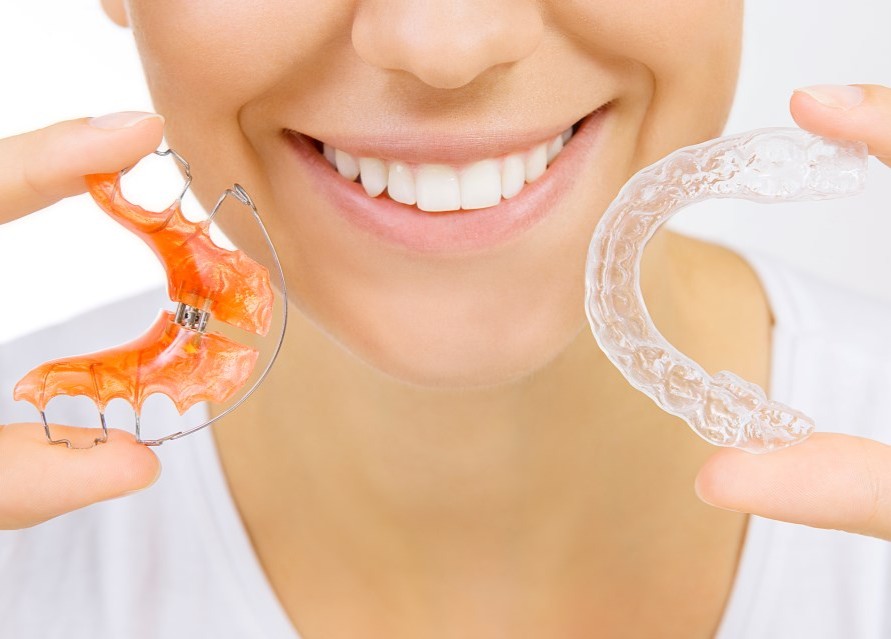
Retention devices can be removable or fixed. They can also be combined together. Removable devices may be in the form of clear retainers or traditional removable acrylic retainers. The fixed version consists of a wire bonded to the teeth on the inner side. It is used in cases with a higher risk of relapse, meaning the return of one or more teeth to their original position.
Removable retainers are typically worn only at night, with the required wearing time being the longest immediately after the active phase of treatment. At first, they are worn every night, and over time, the frequency decreases until, in most cases, they are eventually discontinued. When using fixed retainers, these are securely bonded to the teeth and can remain in the mouth for a longer period, often for 5 years or more.
The retention period is individual. It depends on the type of orthodontic anomaly being treated, the length of the treatment, the patient's age, jaw growth, and other factors. However, it is generally recommended that in pediatric patients, the treatment results should be actively maintained until growth is complete, but usually for 2-3 years at least. In adults, long-term or even lifetime retention is typically required.
After the active phase of orthodontic treatment (removal of fixed appliances), regular check-ups are necessary to monitor the position of the teeth, the relationship of the dental arches, and the condition of the retainers. Check-ups typically occur at 6-month intervals for 2 years. Afterward, the use of retainers is either discontinued, or the patient is thoroughly informed about further steps based on the individual characteristics of the issue. Check-ups for fixed retainers can also be conducted by the general dentist after this period.
We have contracts with all health insurance companies